

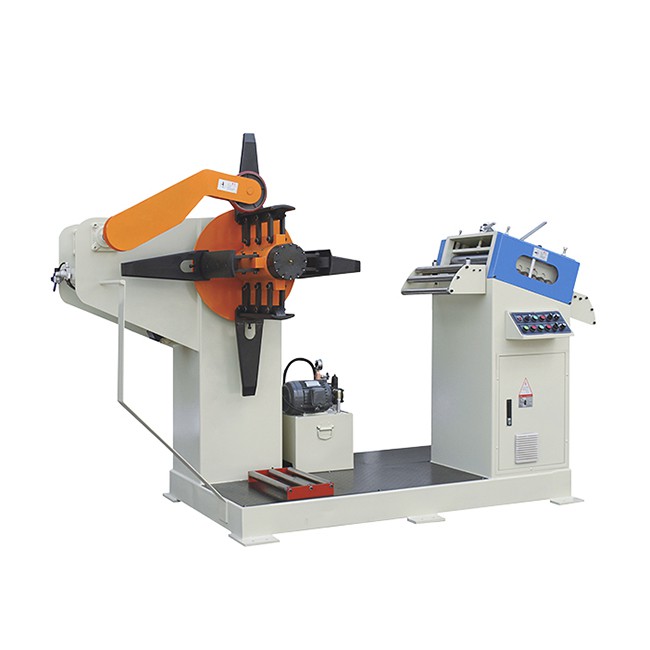
As a supplier of 2 In 1 Feedlines, ensuring the functionality of our products is of utmost importance. The 2 In 1 Feedlines combine the functions of a decoiler and a straightener, offering a compact and efficient solution for metal processing. In this blog, I will share some effective methods on how to test the functionality of 2 In 1 Feedlines.
1. Pre - test Preparation
Before starting the actual testing, it is essential to conduct thorough pre - test preparations. First, visually inspect the 2 In 1 Feedlines. Check for any obvious physical damages such as cracks, dents, or loose parts. Examine the electrical wiring to ensure there are no exposed wires or signs of short - circuits. The mechanical components, including the rollers, bearings, and gears, should be in good condition without any signs of excessive wear.
Next, gather all the necessary testing tools. These may include measuring tapes, calipers, torque wrenches, and multimeters. Make sure these tools are calibrated correctly to obtain accurate test results. Also, prepare the appropriate metal coils that will be used for testing. The coils should have the correct specifications in terms of thickness, width, and material type, as these factors can significantly affect the performance of the 2 In 1 Feedlines.
2. Testing the Decoiling Function
The decoiling function is one of the key features of 2 In 1 Feedlines. To test this function, start by loading the metal coil onto the decoiler part of the machine. Ensure that the coil is centered properly on the mandrel to prevent uneven unwinding.
- Speed and Tension Control: Set the decoiling speed to a low - to - medium level initially. Observe how the machine unwinds the coil. The decoiling process should be smooth, without any jerks or sudden stops. Use a speed - measuring device to verify that the actual decoiling speed matches the set speed. Additionally, check the tension control of the decoiler. The tension should be adjustable to ensure that the metal strip is unwound without excessive slack or tightness. You can use a tension gauge to measure the tension at different points during the decoiling process.
- Coil Alignment: As the coil is being unwound, monitor the alignment of the metal strip. The strip should come off the coil in a straight line and enter the straightening part of the machine without any lateral deviation. If there is misalignment, it may indicate a problem with the coil placement or the decoiler's guiding system. Adjust the guiding rollers or other alignment mechanisms as needed to correct the issue.
3. Testing the Straightening Function
After the metal strip has been decoiled, it enters the straightening part of the 2 In 1 Feedlines. The straightening function is crucial for ensuring that the metal strip has a flat and uniform surface.
- Straightness Measurement: Use a straightedge or a laser straightness measuring device to check the straightness of the metal strip after it has passed through the straightener. Place the straightedge along the length of the strip and look for any gaps between the straightedge and the strip. A well - functioning straightener should reduce the curvature of the strip to an acceptable level. Measure the straightness at multiple points along the strip to ensure consistent results.
- Roller Pressure and Adjustment: The straightening rollers play a vital role in the straightening process. Check the pressure applied by the rollers on the metal strip. The pressure should be evenly distributed across the width of the strip. Use a pressure - measuring device to verify the roller pressure. If the pressure is too low, the strip may not be straightened effectively; if it is too high, it may cause damage to the strip. Adjust the roller pressure according to the thickness and material of the metal strip. Also, test the adjustability of the rollers. You should be able to change the gap between the rollers to accommodate different strip thicknesses.
4. Testing the Integration of Decoiling and Straightening
One of the main advantages of 2 In 1 Feedlines is the seamless integration of the decoiling and straightening functions. To test this integration, run the machine continuously for a certain period.
- Synchronization: Observe how the decoiling and straightening processes work together. The decoiler should supply the metal strip to the straightener at a rate that matches the straightening speed. There should be no accumulation of the strip between the decoiler and the straightener, nor should the straightener run out of material. If there is a synchronization issue, it may be necessary to adjust the control parameters of the machine, such as the speed and acceleration settings.
- Overall Performance: Evaluate the overall performance of the 2 In 1 Feedlines during continuous operation. Check for any abnormal noises, vibrations, or overheating. Abnormal noises may indicate problems with the mechanical components, such as loose bearings or gears. Vibrations can affect the accuracy of the straightening process and may also lead to premature wear of the machine parts. Overheating can be a sign of electrical or mechanical problems, such as excessive friction or a malfunctioning cooling system.
5. Safety Testing
Safety is a top priority when operating 2 In 1 Feedlines. Therefore, it is essential to conduct safety testing as part of the functionality testing.
- Emergency Stop Function: Test the emergency stop button to ensure that it can immediately stop the machine in case of an emergency. Press the emergency stop button while the machine is running and verify that all moving parts come to a halt within a short period.
- Safety Guards and Sensors: Check the integrity of the safety guards installed on the machine. The guards should be properly installed and should not be damaged or removed. Also, test the safety sensors, such as the light curtains and proximity sensors. These sensors are designed to detect the presence of operators or foreign objects in the danger zone and stop the machine automatically. Block the sensors with a non - conductive object and ensure that the machine stops as expected.
6. Documentation and Reporting
After completing all the tests, it is important to document the test results. Create a detailed report that includes the test procedures, the measured values, and any observations or issues found during the testing. This documentation will not only serve as a record of the machine's functionality but also as a reference for future maintenance and troubleshooting.
Conclusion
Testing the functionality of 2 In 1 Feedlines is a comprehensive process that involves multiple steps and aspects. By following the methods described above, you can ensure that the 2 In 1 Feedlines meet the required standards and perform optimally. As a supplier, we are committed to providing high - quality products and excellent after - sales service. If you are interested in our Straightener Uncoilers Machine 2 in 1, Decoiler And Straightener Part Combination Machine, or 2 in 1 Machine Integrates The Decoiler And Straightener Part, please feel free to contact us for more information and to discuss your procurement needs.

References
- Metal Processing Machinery Handbook
- Standards for Feedline Testing in the Metal Industry


