

Fanty machine focus on the domestic market of punch press automation equipment production and sales from 2007. The field including domestic hardware industry , automotive stamping line, auto metal stamping part, saw blade production, high speed rotor and stator stamping and lamination, eyelet stamping line and so on.
Why choose us?
Quality of service
Our top priority is to provide superior quality service to our customers. We strive to understand our customers' needs and expectations to ensure we provide the best possible service.
Competitive prices
We offer competitive pricing for our products and services. We believe in providing value for money and ensuring that our customers get the best possible deal.
Experienced team
Our team consists of experienced and skilled professionals who are equipped with the latest knowledge and technology in our industry.
Customer satisfaction
We are committed to providing excellent customer service and ensuring that our customers are satisfied with our services. We strive to maintain strong and lasting relationships with our customers.
-
![Mechanical Or Pneumatic Release Way Servo Feeder]() Mechanical Or Pneumatic Release Way Servo FeederThe NC Servo Feeder Equipment is driven by servo motor and conducted a Mechanical or Pneumatic release way, which is connected to the punching machineview more
Mechanical Or Pneumatic Release Way Servo FeederThe NC Servo Feeder Equipment is driven by servo motor and conducted a Mechanical or Pneumatic release way, which is connected to the punching machineview more -
![NC Servo Motor Steel Feeder Equipment]() NC Servo Motor Steel Feeder EquipmentNC Servo Motor Steel Feeder Equipment is popular for its easy-operation and smart control feature. Here we list full series items below for your choice. With servo feeder machine, you do not need to worry about complicated setting...view more
NC Servo Motor Steel Feeder EquipmentNC Servo Motor Steel Feeder Equipment is popular for its easy-operation and smart control feature. Here we list full series items below for your choice. With servo feeder machine, you do not need to worry about complicated setting...view more -
![Fast Servo Roll Feed For Metal Sheets]() Fast Servo Roll Feed For Metal SheetsAdvanced press feeding technology, high speed servo roll feederview more
Fast Servo Roll Feed For Metal SheetsAdvanced press feeding technology, high speed servo roll feederview more -
![Press Servo Feeder Equipment For 0.3-3.2mm Thickness]() Press Servo Feeder Equipment For 0.3-3.2mm Thicknesspneumatic coil feeder for sheet metal strip thickness 0.3-3.2mmview more
Press Servo Feeder Equipment For 0.3-3.2mm Thicknesspneumatic coil feeder for sheet metal strip thickness 0.3-3.2mmview more -
![Automatic NC Servo Roll Feeder For Sheet Metal Strip]() Automatic NC Servo Roll Feeder For Sheet Metal StripNC Servo feeder machine is easy adjust feeding length.view more
Automatic NC Servo Roll Feeder For Sheet Metal StripNC Servo feeder machine is easy adjust feeding length.view more -
![Performance High Speed Roll Feeds System]() Performance High Speed Roll Feeds SystemPerformance High Speed Roll Feed Servo roll feeding system for precise and fast stampingview more
Performance High Speed Roll Feeds SystemPerformance High Speed Roll Feed Servo roll feeding system for precise and fast stampingview more -
![Auto Steel Coil Roll Feeder]() Auto Steel Coil Roll FeederAlways work with C frame and H frame high speed punch press machine. 7. Mostly use for terminal, battery metal parts, metal button, rivet, stud, clip production line.view more
Auto Steel Coil Roll FeederAlways work with C frame and H frame high speed punch press machine. 7. Mostly use for terminal, battery metal parts, metal button, rivet, stud, clip production line.view more -
![High Precision Servo Feeder Machine]() High Precision Servo Feeder MachinePreviously unattainable high-precision numerical control is made possible by CCS (computer controlled servo).For fast and accurate performance.view more
High Precision Servo Feeder MachinePreviously unattainable high-precision numerical control is made possible by CCS (computer controlled servo).For fast and accurate performance.view more -
![All In One Servo Feeder Machine]() All In One Servo Feeder MachineOur flagship product is an all-in-one, space-saving servo feeder. can be altered to suit the needs of the customer. PU silicone rollers can be modified to meet specific customer needs.view more
All In One Servo Feeder MachineOur flagship product is an all-in-one, space-saving servo feeder. can be altered to suit the needs of the customer. PU silicone rollers can be modified to meet specific customer needs.view more -
![Mechanical Gripper Feeder]() Mechanical Gripper FeederMechanical gripper feeder Suitable for thin 0.1-1.6mm thick material. Belt drive, dial adjustment, good stability, simple and easy operation. Thickness adjustment is accordance with rotation scale. Feeding length adjustment by crank...view more
Mechanical Gripper FeederMechanical gripper feeder Suitable for thin 0.1-1.6mm thick material. Belt drive, dial adjustment, good stability, simple and easy operation. Thickness adjustment is accordance with rotation scale. Feeding length adjustment by crank...view more -
![High Speed Stamping Gripper Feeder]() High Speed Stamping Gripper FeederHigh speed stamping gripper feeder Suitable for thin 0.1-1.6mm thick material. High speed feeding , feeding speed up to 1200spm. Max. increase production capacity, reduce costs. Most suitable for the production of a variety of more...view more
High Speed Stamping Gripper FeederHigh speed stamping gripper feeder Suitable for thin 0.1-1.6mm thick material. High speed feeding , feeding speed up to 1200spm. Max. increase production capacity, reduce costs. Most suitable for the production of a variety of more...view more -
![New High Speed Precise Gripping Feeder]()


The principle of an NC servo roller feeder machine is based on a combination of electrical and mechanical processes. It utilizes a servo motor to provide precise and accurate feeding of materials into a manufacturing process. The servo motor is connected to a set of mechanical rollers that are designed to feed the material in a controlled manner.
The roller feeder machine is built with a feedback system that accurately tracks the position of the roller and ensures that the material is fed with precision. The NC control system is responsible for regulating the speed and position of the servo motor, which in turn affects the speed of the rollers.
The NC servo roller feeder machine can accommodate a wide range of material thicknesses. It is capable of working with thin sheets of metal as well as thicker materials like steel plates. The accuracy and precision of the feeder machine make it ideal for use in high-volume manufacturing environments where speed and efficiency are critical.
The principle of NC servo roller feeder machine is to provide a reliable and accurate method for feeding materials into the manufacturing process. By utilizing a servo motor and precision rollers, the NC control system ensures that the material is fed smoothly and accurately, leading to improved quality and productivity.
How Choosing the Best NC Servo Feeder Machine
Choosing the best NC servo feeder machine can be a daunting task, especially for those who are new to the industry. Servo feeders are an essential component of many production lines, and selecting the right one can make all the difference in the quality and efficiency of the manufacturing process. Here are some factors to consider when choosing the best NC servo feeder machine:
Material Type and Thickness: The first consideration is the material type and thickness that the machine will be feeding. Depending on the material, you may need a feeder with specially designed features, such as a straightener or dual-roll feed mechanism. A large feed roll diameter is also essential for handling thicker or harder materials. Make sure the machine you choose is rated for the materials you will be working with.
Speed and Accuracy: The speed and accuracy of the machine are crucial factors that affect the productivity and quality of the production process. Look for a machine that offers high speed and accuracy, as well as quick and easy speed adjustments. The feeder's control system should be advanced enough to ensure precise feed and fast response times.
Feeder Width and Capacity: The machine's feeder width and capacity are also critical factors to consider. The feeder's width should be at least as wide as the material's widest part, and the feeder's capacity should be sufficient to handle the amount of material required for the production process.
Ease of Use and Maintenance: The feeder machine should be easy to operate and maintain, with intuitive controls and accessible components. The machine should also be easy to clean and maintain, with low maintenance requirements, minimal downtime, and simple adjustments for various materials.
Durability and Warranty: Finally, the machine's durability and warranty are essential factors to consider. Look for a well-built machine with a solid warranty that covers all parts and labor for a minimum of one year. A sturdy machine will last longer and require less maintenance, which can save money in the long run.
Overall, choosing the best NC servo feeder machine requires careful consideration of several key factors, including material type and thickness, speed and accuracy, feeder width and capacity, ease of use and maintenance, and durability and warranty. By weighing these factors carefully and consulting with an experienced supplier, you can select the best servo feeder machine to meet your company's needs and drive efficiency and profitability in your production line.
A Comprehensive Guide to Air Feeder Operation
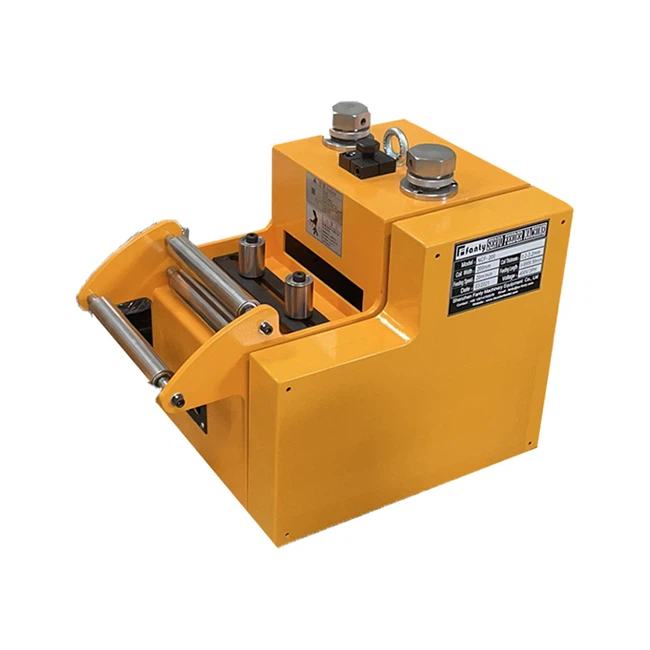


Air feeders are commonly used in various industries, including automotive, food, and manufacturing, to precisely feed materials into machines. In this comprehensive guide to air feeder operation, we will discuss the basics of how air feeders work, their advantages, common applications, and the steps for operating and maintaining them.
How do Air Feeders Work?
Air feeders are designed to use compressed air to move materials from one location to another, often from a hopper to a machine that processes the material. The feeder usually consists of a hopper, a conveying line, and a nozzle. As compressed air is introduced into the feeding system, it moves the material down the line and out through the nozzle.
Advantages of Air Feeders
Air feeders have several advantages over other feeding methods, including:
Precise Material Feeding - Air feeders can deliver precise amounts of material, ensuring that a machine doesn't get overloaded or starved for material.
Reduced Material Handling - By automating the feeding process, air feeders reduce the need for manual handling of materials, leading to increased safety, faster production times, and reduced labor costs.
Versatility - Air feeders can handle a variety of materials, such as powders, pellets, granules, and more.
Common Applications of Air Feeders
Air feeders are used extensively in a variety of applications, including:
Material Handling and Processing - Air feeders are used to move and control materials in machines during processing and assembly processes.
Powder Coating - They are used in powder coating applications to ensure a consistent flow of material onto the product.
Food Processing - They are used in the food industry to move and distribute ingredients such as flour, sugar, and spices.
Steps for Operating an Air Feeder
Here are the general steps for operating an air feeder:
Preparation - Before starting, ensure that the hopper is properly loaded with the material to be fed and the air compressor is functioning correctly.
Set Up - Connect the air feed line to the nozzle and machine, making sure all connections are secure.
Adjustment - Adjust the air pressure and flow rate to control the speed and amount of material being fed to the machine.
Operation - Start the feeder and observe the material flow to ensure it is delivering the desired amount and speed.
Maintenance - Regularly clean and inspect the feeder to ensure it is operating efficiently and effectively.
Conclusion
Air feeders are versatile and reliable components in various industries. By understanding how they work and following the necessary steps for operating and maintaining them, you can ensure their safe and efficient use in your production process.
A 3-in-1 press feed line is a versatile and efficient machine that combines three separate processes into one machine: decoiling, straightening, and feeding. Here are some of the advantages of using a 3-in-1 press feed line:
Time Savings: With a 3-in-1 press feed line, you can complete three separate processes in one machine. This not only saves time, but also eliminates the need for manual intervention between each process, which reduces the risk of errors and improves overall efficiency.
Space Savings: Instead of three separate machines for decoiling, straightening, and feeding, a 3-in-1 press feed line only requires one machine. This can save valuable floor space in your factory or workshop.
Consistent Quality: Because all three processes are completed by the same machine, there is less variability between each process. This means that you can achieve consistent quality in your finished products, which is important for meeting customer specifications and reducing waste.
Reduced Costs: By eliminating the need for multiple machines and reducing the risk of errors, a 3-in-1 press feed line can help lower production costs.
Flexibility: 3-in-1 press feed lines can be customized to suit your specific needs. You can choose the appropriate width and thickness of the material you are working with, and adjust the speed of the machine to match your production requirements.
A 3-in-1 press feed line is an efficient and cost-effective machine that can help improve productivity and quality while saving time and floor space.


Gear feeders have been increasingly used in high-speed presses for their capability of enhancing stamping precision. In the stamping process, the gear feeders play a crucial role in ensuring accurate and consistent feeding of the materials to be stamped. They help to maintain the correct distance between the materials and the dies, prevent slippage, and minimize material waste.
One of the main advantages of gear feeders is their ability to provide a steady and controlled feed rate. Unlike other feeding mechanisms, gear feeders can maintain a constant speed without any deviations or interruptions. This results in a more consistent production output and reduces the likelihood of errors in the stamping process.
Gear feeders also offer superior accuracy and precision compared to other feeding mechanisms. The gears of the feeder ensure a precise alignment between the materials and the dies. This eliminates the chances of misalignment or misfeeds, which can lead to defective productions and wasted materials. Gear feeders also allow for customization of feed distances and can be adjusted to meet specific stamping requirements.
The use of gear feeders in high-speed presses also reduces the likelihood of downtime and machine maintenance. Gear feeders are designed to withstand heavy loads, frequent use, and harsh conditions. They require minimal maintenance and are less susceptible to wear and tear compared to other feeding mechanisms. This translates to reduced downtime and increased productivity in the stamping process.
The use of gear feeders in high-speed presses is a smart investment for companies seeking to enhance their stamping precision and productivity. The advantages of gear feeders include steady and controlled feed rates, superior accuracy and precision, and reduced downtime and maintenance. By incorporating gear feeders in their stamping processes, companies can achieve better production efficiencies, minimize material waste, and produce high-quality products consistently.
Types of high-speed Mechanical Feeder Machines
Mechanical Roller Feeder
A mechanical roller feeder is a conventional coil feeder powered by the press machine. It doesn't need electricity or air supply, which is energy-saving and low costing. You may need some time to install a roller feeder. But when it starts work, it always performs excellent, with high precision, super low failure rate, and very few maintenances.
Gripper Feeder Mechanical
Unlike the mechanical roller feeder, the gripper feeder uses a linear motion to move the metal strip. It has two clamps powered by an air cylinder to move forward and returns. We also provide a servo-drive gripper feeder machine. It makes no noise and will not be left any mark on the material. So it's perfect for sensitive surface strips, such as aluminum, stainless steel, and a wide range of secondary processing material.
Gear Feeder
The gear feeder is a specially designed press feeder for the electrical steel stamping process. It's a cam drive feeder and changes different gears to adjust the feeding length. Unlike the 500SPM high-speed servo feeder at a high cost, the gear feeder is affordable for high-speed lamination stamping.
The following table is a comparison of the different types of the mechanical feeder from.
| Types | Roller feeder | Gripper feeder | Gear feeder |
| Material thickness | 0.1-3.5 mm | 0.1-1.5 mm | 0.1-1.6 mm |
| Coil width | ≤400 mm | ≤90 mm | ≤300 mm |
| Materials that can be processed | Copper, brass, iron, aluminum, stainless steel, galvanized steel | Electroplating steel, aluminum alloy, stainless steel, copper, secondary processing | Electrical steel (lamination steel, silicon electrical steel, silicon steel) |
| Feeding speed | Max. 600 SPM | Max. 1200 SPM | Max. 500 SPM |
| Feeding precision | ±0.05mm(up to ±0.01mm with guide pin) | ±0.05mm | ±0.05mm |
| Applications | Small steel parts, metal buttons stamping | Terminals stamping, small clips stamping | Motor stator and rotor stamping, EI steel |
Coil feeder is an indispensable equipment in light industry and heavy industry. This article will introduce the relevant knowledge of the feeder, I hope it will be helpful to everyone.
Coil feeder is specially used for conveying products such as pellets, powders, flakes, and strips. Coil feeders are widely used in various industries. In today's society, more and more manufacturers use mechanized transportation. This method is inevitable to replace human labor. It has high accuracy, saves time and labor, and greatly reduces labor intensity, reduces labor costs and saves human resources. Really achieved low cost and high return. In the era of rapid development, this kind of automation products will be favored and liked by more and more manufacturers!
The air coil feeder is the earliest feeding equipment used in the stamping industry. The principle of the air coil feeder is powered by air, clamps the material through the cylinder, and feeds the material by the telescopic stroke of the cylinder, and adjusts the length of the feed by adjusting the cylinder. The length of the stroke is controlled. Advantages of the air coil feeder: easy to operate, easy to install, affordable, and a feeding device that can realize automatic punching at the lowest price.
Coil feeder is an automated equipment that feeds coils into a punching machine or cutting machine. The compact 3-in-1 feeder includes an uncoiler, a straightener feeder and an optional coil loading trolley. These parts can work as decoiler, straightener and servo feeder respectively. If the coil weight and width are not too large, the decoiler and the straightener can be combined, and we can call it a two-in-one decoiler. Coil feeders and accessories are widely used in automatic stamping lines and ruler line slitting lines. We can recommend the most suitable coil feeding system for our customers based on the detailed information of the coil, such as the weight of the coil, the thickness and width of the sheet, and the working speed of the automatic stamping line.

The Advantages of Using Servo Roll Feeders in Manufacturing
Optimizing production processes in today's fast-paced manufacturing industry is crucial for staying competitive. The servo roll feeder is one technology that has revolutionized material handling and feeding operations. By combining precision engineering with advanced control systems, servo roll feeders offer numerous advantages that can enhance efficiency and productivity on the factory floor. This blog post will explore the key benefits of using servo roll feeders in manufacturing operations.
Enhanced Precision and Accuracy
Servo roll feeders excel in providing precise and accurate feeding of materials, ensuring consistent and reliable production. Their high-speed servo motors and advanced control algorithms can deliver exact feed lengths, minimize material slippage, and eliminate manual or mechanical feeding errors. This level of precision translates into improved product quality and reduced scrap rates.
Increased Production Efficiency
One of the significant advantages of servo roll feeders is their ability to boost production efficiency. By automating the feeding process, these feeders eliminate the need for manual intervention, reducing human error and increasing overall productivity. Servo roll feeders can achieve high feed rates, allowing manufacturers to meet demanding production schedules and deliver products on time.
Flexibility and Versatility
Servo roll feeders are designed to accommodate various materials, including metals, plastics, and composites. They can handle widths and thicknesses, making them suitable for various manufacturing applications. Additionally, servo roll feeders offer adjustable feed lengths and feeding speeds, allowing manufacturers to quickly adapt to changing production requirements.
Improved Material Utilization
With their precise control and accurate feeding capabilities, servo roll feeders help optimize material usage. Manufacturers can reduce production costs and improve profitability by minimizing material waste and scrap. The ability to precisely feed materials also enables better nesting of parts, maximizing the utilization of the raw material and minimizing waste.
Operator-Friendly and Safe
Servo roll feeders prioritize operator safety and ease of use. They are equipped with user-friendly interfaces that allow operators to set up and adjust feeding parameters with minimal effort. Additionally, these feeders feature safety mechanisms, such as emergency stop buttons and overload protection, ensuring a secure working environment for operators.
Seamless Integration and Compatibility
Servo roll feeders are designed to integrate seamlessly into existing manufacturing systems. They can be easily retrofitted to various types of production equipment, such as presses, stamping machines, and cut-to-length lines. This compatibility enables manufacturers to upgrade processes without significant disruption, saving time and resources.
Our Factory
Fanty machine focus on the domestic market of punch press automation equipment production and sales from 2007. The field including domestic hardware industry , automotive stamping line, auto metal stamping part, saw blade production, high speed rotor and stator stamping and lamination, eyelet stamping line and so on.
FAQ
Q: What is a feeder?
Q: What kinds of feeders are there?
Q: What are the benefits of using a feeder?
Q: What should I consider when choosing a feeder?
Q: How do I clean my feeder?
Q: Where should I place my feeder?
Q: How often should I refill my feeder?
Q: Can I use a feeder for other substances besides food?
Q: What are the common materials used to make feeders?
Q: Are there any safety precautions I should take when using a feeder?
Q: What is an NC servo roll feeder?
Q: What are the advantages of using an NC servo roll feeder?
Q: How does an NC servo roll feeder work?
Q: What types of metal can an NC servo roll feeder handle?
Q: What is the maximum width of metal that can be fed through an NC servo roll feeder?
Q: How fast can an NC servo roll feeder operate?
Q: Can an NC servo roll feeder be used with other types of machinery besides presses?
Q: Is it difficult to set up and operate an NC servo roll feeder?
Q: What is a feeder roll?
Q: What is the purpose of a servo?
We're professional feeder manufacturers and suppliers in China, providing the best customized service. Welcome to wholesale bulk feeder in stock here from our factory.
Automatic UNCoiling Straightening Feeding, S Loop Straighteners, Stainless Steel Flat Strip Pallet Decoiler


