

Fanty machine focus on the domestic market of punch press automation equipment production and sales from 2007. The field including domestic hardware industry , automotive stamping line, auto metal stamping part, saw blade production, high speed rotor and stator stamping and lamination, eyelet stamping line and so on.
Why choose us?
Quality of service
Our top priority is to provide superior quality service to our customers. We strive to understand our customers' needs and expectations to ensure we provide the best possible service.
Competitive prices
We offer competitive pricing for our products and services. We believe in providing value for money and ensuring that our customers get the best possible deal.
Experienced team
Our team consists of experienced and skilled professionals who are equipped with the latest knowledge and technology in our industry.
Customer satisfaction
We are committed to providing excellent customer service and ensuring that our customers are satisfied with our services. We strive to maintain strong and lasting relationships with our customers.
-
![Manual Decoiler Machine]()
-
![Automatic Decoiler Machine]()
-
![500mm Coil Width Double Heads Decoiler]() 500mm Coil Width Double Heads Decoilerdouble heads decoiler for 500mm width coil handlingview more
500mm Coil Width Double Heads Decoilerdouble heads decoiler for 500mm width coil handlingview more -
![3000kgs Coil Loading Double Heads Decoiler For Coil Handling]() 3000kgs Coil Loading Double Heads Decoiler For Coil Handlingdouble heads decoiler can handle 3000kgs coil for sheet metal lineview more
3000kgs Coil Loading Double Heads Decoiler For Coil Handlingdouble heads decoiler can handle 3000kgs coil for sheet metal lineview more -
![450-530mm Coil Inner Diameter Double Heads Decoiler]() 450-530mm Coil Inner Diameter Double Heads Decoiler450-530mm Coil Inner Diameter double heads decoilerview more
450-530mm Coil Inner Diameter Double Heads Decoiler450-530mm Coil Inner Diameter double heads decoilerview more -
![0~1.6mm Double Heads Decoiler For Coil Handling]() 0~1.6mm Double Heads Decoiler For Coil HandlingApplication of Non Motorised Double Head Uncoiler Machine Non Motorised Double Head Uncoiler Machine is widely used for motor core industry, rotor & stator lamination, EI /EE / EF sheet, and so on.view more
0~1.6mm Double Heads Decoiler For Coil HandlingApplication of Non Motorised Double Head Uncoiler Machine Non Motorised Double Head Uncoiler Machine is widely used for motor core industry, rotor & stator lamination, EI /EE / EF sheet, and so on.view more -
![200mm Coil Width Double Heads Uncoiler]() 200mm Coil Width Double Heads Uncoiler200mm coil width None Motorised Double Heads Uncoilerview more
200mm Coil Width Double Heads Uncoiler200mm coil width None Motorised Double Heads Uncoilerview more -
![2000 Kgs Coil Loading Decoiler For Sheet Line Coilhandling]() 2000 Kgs Coil Loading Decoiler For Sheet Line Coilhandling2000 kgs coil loading decoiler for sheet line coilhandlingview more
2000 Kgs Coil Loading Decoiler For Sheet Line Coilhandling2000 kgs coil loading decoiler for sheet line coilhandlingview more -
![500mm Coil Width Decoiler For Coil Sheet]()
-
![400mm Coil Width Decoiler For Coil Handling]()
-
![300mm coil width Uncoiler For Metal Sheet Line]() 300mm coil width Uncoiler For Metal Sheet Line300mm coil width Uncoiler For Metal Sheet Lineview more
300mm coil width Uncoiler For Metal Sheet Line300mm coil width Uncoiler For Metal Sheet Lineview more -
![200mm Coil Width Sheet Metal Decoiler]()


A decoiler is a piece of equipment used primarily in metalworking processes to roll out and feed a continuous strip of metal from a coil or spool into a downstream production line. The machine works by unwinding the coil, using a motor or other drive mechanism, and then passing the strip through a straightening mechanism to ensure the material is flat and straight before it is fed into the next process. The decoiler is commonly used in metal fabrication, roll forming, stamping, and other metal processing applications.
So what are the Characteristics of the Decoiler?
The uncoiler is a machine used for the unwinding of metal coils in the metalworking industry. The main characteristics of an uncoiler are:
Tension Control: The uncoiler applies just the right amount of tension on the coil to ensure that the material unwinds smoothly and doesn't get damaged.
Coil Holding: The uncoiler holds the metal coil in place securely so that it doesn't wobble or fall off while being processed.
Adjustable Speed: The uncoiler's speed can be adjusted to match the processing requirements of the downstream machines.
Control Panel: The uncoiler has a control panel that can be used to set up and control the machine's operation.
High Capacity: The uncoiler can handle coils of various sizes and weights, and can unwind them at a speed of up to hundreds of meters per minute.
Safety Measures: The uncoiler has safety features to protect the operator and prevent accidents during operation.
Easy Maintenance: The uncoiler is designed for ease of maintenance, with easy access to all parts and components for cleaning and repairs.
When considering an uncoiler for your application, there are several basic variables you should take into account:
- The thickness of the material
- The width range of metal strip
- The Max. weight of metal coil
- The coil inside diameter and outside diameter
- Your application and speed request
All influence the uncoiler configuration and capabilities required for a successful installation.

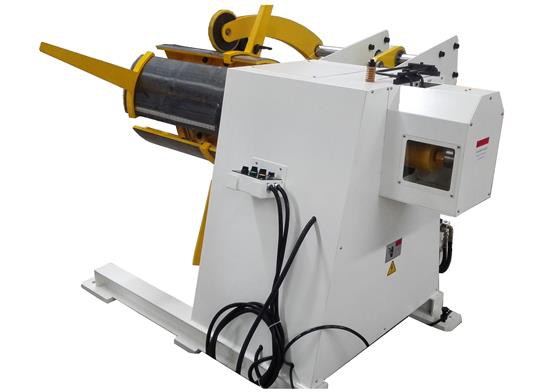
Application of Flat Uncoiler
A flat uncoiler is a machine used in the metalworking industry to unwind and straighten rolled metal coils. It is an essential tool in the manufacturing process of various metal products, including sheet metal, plate metal, and other flat metal components.
The flat uncoiler helps to improve the efficiency of the production process by providing a reliable and consistent method of metal coil unwinding and straightening. It can handle metal coils of different sizes and thicknesses, depending on its capacity.
Some of the common applications of the flat uncoiler include:
Sheet Metal Production: The flat uncoiler is widely used in the production of sheet metal, which is used in various industries, including automotive, aerospace, construction, and household appliances.
Pipe and Tubing Manufacturing: In the pipe and tubing manufacturing industry, flat uncoilers are used to unwind and straighten the coils of metal that are then used to create tubes and pipes of different shapes and sizes.
Metal Stamping: Flat uncoilers are commonly used in the metal stamping industry to supply continuous sheets of metal for stamping and forming into different shapes and sizes.
Metal Fabrication: The flat uncoiler is an essential tool in metal fabrication, where it is used to unwind and straighten metal coils that are then cut and formed into various components and products.
Steel Processing: Flat uncoilers are also used in the steel processing industry, where they are used to unwind coils of steel that are then flattened, cut, and processed into various forms such as bars, rods, and structural shapes.
Overall, the flat uncoiler is a versatile machine that finds a wide range of applications in the metalworking industry, helping to improve the efficiency, accuracy, and quality of the production process.
The Decoiler Machine and Its Daily Maintenance
The decoiler machine is an essential tool in the manufacturing industry, especially in metal processing. It is used to unwind and straighten metal coils, ensuring proper material handling in the production line. To ensure the seamless operation of the decoiler machine, it is essential to perform daily maintenance. Here are some maintenance tips that can help prolong the machine's service life:
Regular cleaning - Before and after use, the decoiler machine should be cleaned to remove any debris or residue that may have been leftover from the material that was processed. This will prevent the accumulation of debris that may cause damage or jams in the machine.
Lubrication - Proper lubrication is essential to prevent corrosion and reduce friction between machine parts. Regular lubrication of moving parts such as bearings, rollers, gears, and chains can ensure smooth operation of the decoiler.
Inspection - Daily inspections should be performed to check the machine's wear and tear, such as loose bolts, damaged belts, and worn-out rollers. Any issues found during inspection should be addressed immediately to prevent further damage to the machine.
Belt tension - Proper belt tension is critical in the operation of the decoiler machine. It is recommended to check the tension of the belts regularly, especially when the machine is exposed to high temperatures, vibrations, or other factors that may affect the tension.
Safety - Proper safety procedures should be followed to prevent accidents and injuries. All operators should wear proper safety equipment such as gloves, goggles, and helmets, and ensure that all guards and safety devices are operational.
By following these maintenance tips, the decoiler machine can provide years of reliable service, ensuring smooth operation and increased productivity in the manufacturing process.
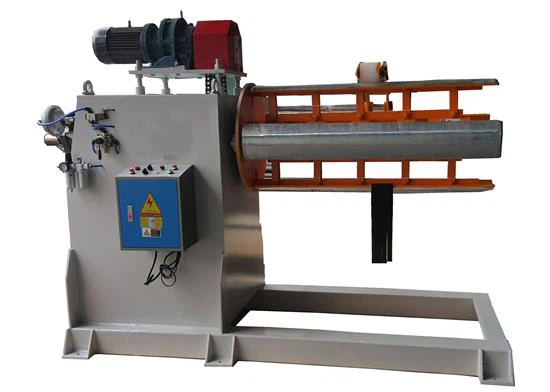
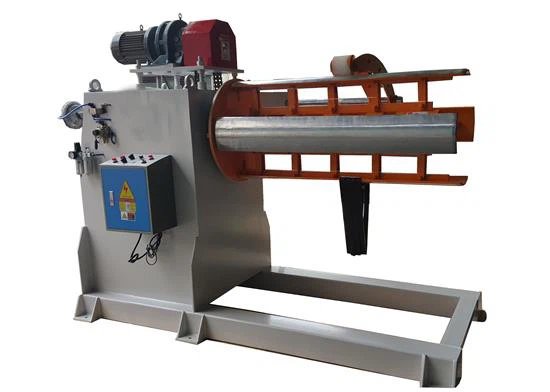
Structure of Decoiler
An Uncoiler is a machine used to feed strip or sheet metal through a press, upender, or other metal fabrication machinery. The machine controls the speed at which the metal is unrolled and fed through the production line.
The main components of an Uncoiler include:
Frame: The frame is the skeletal structure of the machine, constructed using high-quality steel or other materials to provide stability and strength.
Mandrel: The Mandrel is a large, hollow cylinder that holds the metal coil. It is usually made from steel or other durable materials and is designed to handle the weight and size of the coil.
Brake System: The brake system is used to prevent the metal coil from unwinding uncontrollably. It helps in maintaining the desired tension for the metal to pass through the production line smoothly.
Drive System: The drive system is responsible for powering the machine and driving the metal coil through the production line.
Coiling Rolls: The coiling rolls are responsible for guiding the metal coil through the production line. They are made using durable materials such as steel or hardened aluminum to prevent excessive wear and tear.
Safety Features: Safety features may include guards, covers, emergency stop buttons, and other safety mechanisms designed to protect the operator and prevent accidents.
How Does a Manual Decoiler Machine Work?
A manual decoiling machine is a device used to unroll a coil of material such as metal or plastic. Here's how it works:
- The coil of material is placed on a spindle or mandrel in the center of the decoiling machine.
- The operator manually releases the locking mechanism on the mandrel to allow it to rotate freely.
- The operator then manually turns a handle on the machine that rotates the spindle, unrolling the coil of material.
- As the material unrolls, it's typically fed through a straightening machine or other processing equipment to prepare it for further use.
- The process continues until the entire coil has been unrolled from the spindle and the material is ready for use.
Manual decoilers are simple and easy to use, but they can be time-consuming if a large amount of material needs to be unrolled. For this reason, many manufacturers opt for automatic decoiling machines that can unroll material more quickly and efficiently.

Work flow of Decoiler
-
The coiled material is loaded onto the uncoiler mandrel.
-
The uncoiler is activated, and the mandrel begins to rotate, unwinding the coil.
-
The material passes through the pinch rollers, which regulate tension and guide the material.
-
The straightener, if necessary, corrects shape and alignment.
-
The material is fed into the next stage of the production process, such as a press, stamping machine, or roll forming line.
-
The uncoiler continues to rotate, feeding the material at a consistent speed.
-
If the coil runs out, the uncoiler stops, and the operator loads a new coil onto the mandrel.

Application of Decoiler
Uncoilers are used in various industries and manufacturing processes where coils or spools of material need to be unwound, flattened, or straightened before they can be further processed. Some common applications of uncoilers include:
Metalworking
In metalworking, coils of steel, aluminum, brass, or copper are unwound through an uncoiler to be cut, stamped, or rolled into different shapes and sizes.
Wire and cable production
Uncoilers are used to unwind spools of wire or cable that then get processed through machines to be cut, fused, or braided.
Textile industry
Uncoilers are used to unwind rolls of fabric, thread, or yarn that then get processed through machines to be cut, stitched, or woven into different textiles.
Paper and printing industry
Uncoilers are used to unwind rolls of paper or labels that then get processed through machines to be printed, cut, or laminated.
Coil handling systems
Uncoilers are an integral part of automated coil handling systems that are used in various industries, including automotive and electrical, to efficiently handle and process large coils or spools of raw material.

The Classification of Decoiler
Manual uncoiler: A manual uncoiler is the most basic and inexpensive type of uncoiler. It is manually operated by the operator, and the coil is rotated manually. A manual uncoiler is more suitable for small and lightweight coils.
Motorised uncoiler: A motorised uncoiler is a type of uncoiler that uses an electric motor to rotate the coil. This type of uncoiler is more efficient and faster than a manual uncoiler and can handle larger coils.
Hydraulic uncoiler: A hydraulic uncoiler uses hydraulic power to lift and rotate the coil. It is suitable for handling heavier and larger coils.
Double-headed uncoiler: A double-headed uncoiler is used for high-speed production lines. It can hold two coils at once, allowing for continuous production without any downtime.
Combination uncoiler-straightener: A combination uncoiler-straightener is a type of uncoiler that can also straighten the coil as it unrolls. This type of uncoiler is useful when the material needs to be straightened before being used in the production process.
Pallet uncoiler: A pallet uncoiler is used for uncoiling heavy coils that are loaded onto a pallet. It is similar to a motorised uncoiler but has additional support to handle the weight of the pallet.
Non-mandrel uncoiler: A non-mandrel uncoiler is a type of uncoiler that does not require a mandrel - a device that holds the coil in place. Instead, the coil is supported by a series of rollers. This type of uncoiler is useful for coils that cannot be tightly wound or for coils with irregular shapes.
Are There any Safety Precautions to Be Taken While Operating a Manual Decoiler Machine?
Yes, there are several safety precautions that should be taken while operating a manual decoiler machine:
- Always wear appropriate personal protective equipment (PPE), such as eye goggles, gloves, and safety shoes.
- Make sure the decoiler is properly installed and secured to prevent it from moving during use.
- Check the material being loaded onto the decoiler for any defects or irregularities that could cause issues during operation.
- Stand to the side of the decoiler while operating it to avoid injury from flying debris.
- Do not touch the material being unwound from the decoiler while it is in motion.
- Keep the area around the decoiler clear of any obstacles or hazards.
- Do not overload the decoiler beyond its weight capacity.
- Do not operate the decoiler if there are any signs of damage or malfunction.
- Follow all manufacturer's instructions and recommendations for safe operation.
- Train yourself properly and get familiar with the decoiler machine before operating it.

Advantages of Using Hydraulic Decoiler
Hydraulic decoiler is an efficient equipment used in various industries for decoiling and feeding metal coils. It plays an important role in the metal manufacturing process, ensuring smooth and continuous production. This article will discuss the benefits of using a hydraulic decoiler and its various uses.
Increase productivity
Hydraulic decoilers significantly increase productivity compared to manual methods. The automatic rewind process saves time and eliminates manual intervention, allowing operators to focus on other important tasks. Increased efficiency increases productivity and shortens delivery times.
Precise coil control
The hydraulic uncoiler uses an advanced hydraulic system to accurately control the unwinding process. The operator can adjust the speed and tension according to the specific requirements of the material being processed. This level of control ensures feed consistency and minimizes the risk of material damage or deformation.
Improve security
Keeping workers safe is critical in any industrial environment. The hydraulic decoiler is designed with safety features such as emergency stop button, overload protection and interlocking system. These features prevent accidents and injuries and create a safer working environment for operators.
Versatility
Hydraulic decoilers are suitable for a variety of materials, including steel, aluminum, copper, etc. It can accommodate coils of various widths and weights, making it suitable for a variety of applications. Whether in automotive, construction or manufacturing, hydraulic decoiler machinery can meet a variety of material requirements.
Space optimization
Space in industrial facilities is often at a premium. Hydraulic decoilers are designed to optimize space utilization. The compact footprint makes it easy to integrate into existing production lines. In addition, some models can be flexibly installed on the floor or in a pit, further saving valuable floor space.
Reduce material waste
One of the main benefits of using a hydraulic decoiler is the reduction in material waste. Precise control of the unwinding process minimizes scrap and scrap, reducing costs for your business. Additionally, precise dosing ensures optimal use of materials, contributing to a more sustainable and environmentally friendly operation.
Coil replacement is easy
Replacing coils is a common requirement in metal fabrication. The hydraulic decoiler is designed for quick and easy coil changes. The hydraulic mandrel telescopic mechanism simplifies the process and allows the operator to efficiently switch between different coil sizes and types. This feature reduces downtime and increases overall productivity.
Remote control and automation
Many modern hydraulic decoilers are equipped with remote control and automation capabilities. This allows the operator to control the machine from a safe distance, increasing convenience and safety. Automation capabilities can be seamlessly integrated with other production equipment to streamline the entire manufacturing process.
What Is A Customized Hydraulic Uncoiler
In the industrial field, hydraulic decoilers are a vital technology that provides key support for the efficient operation of production lines. Especially in metal processing, coil production and other related industries, the application of hydraulic decoilers is crucial. As a solution designed to meet specific production needs, customized hydraulic decoilers play an irreplaceable role in industrial environments that meet special requirements.
The criticality of hydraulic decoilers in industrial applications
Hydraulic decoiler is a device used to unwind and coil coiled materials, and is widely used in metal processing, building materials, papermaking and other industries. It is responsible for ensuring that the coil material enters the downstream production line smoothly, efficiently and accurately. In industrial production, the unwinding of coils is a key step in the entire production process, which has a direct impact on product quality and production efficiency.
Definition of Customized Hydraulic Uncoiler
Compared with standard hydraulic decoilers, custom hydraulic decoilers are equipment designed and manufactured according to specific production needs and environmental requirements. This type of decoiler goes beyond simply unwinding coils and is more focused on meeting customer expectations for production line flexibility, special material requirements, and a high degree of automation.
This customized design can include a variety of special features and accessories to suit the needs of different industries and applications. The flexibility of custom hydraulic decoilers makes them an ideal choice for many industrial manufacturers seeking higher productivity and better product quality.
Characteristics of Standard Hydraulic Uncoiler
Standard hydraulic decoilers typically have some common design and functional features to suit a wide range of industrial applications.
These characteristics may include
Basic functions: The standard hydraulic decoiler is mainly designed to complete the unwinding task of coiled materials and has basic coiling and unwinding functions.
Scope of application: They are generally suitable for processing common materials such as metal coils, as well as standard sizes and weights of coils.
Universal design: Standard designs are usually designed for versatility to meet a wide range of production needs, rather than customized needs for specific industries.
Cost-Effectiveness: Due to their versatility, standard hydraulic decoilers generally have lower manufacturing costs and are suitable for situations where budgets are limited.
Our Factory
Fanty machine focus on the domestic market of punch press automation equipment production and sales from 2007. The field including domestic hardware industry , automotive stamping line, auto metal stamping part, saw blade production, high speed rotor and stator stamping and lamination, eyelet stamping line and so on.
FAQ
Q: What is a decoiler?
Q: What types of materials can be used with a decoiler?
Q: What are the advantages of using a decoiler?
Q: How does a decoiler work?
Q: What are the different types of decoilers?
Q: What factors should be considered when choosing a decoiler?
Q: How can a decoiler be maintained?
Q: Can a decoiler be customized?
Q: What is the meaning of Decoiling?
Q: What is a flat uncoiler?
Q: What are the types of flat uncoilers?
Q: What materials can be processed with a flat uncoiler?
Q: What are the benefits of using a flat uncoiler?
Q: What is the maximum width of material that can be processed with a flat uncoiler?
Q: What is the maximum weight of material that can be processed with a flat uncoiler?
Q: How does a flat uncoiler work?
Q: How do I choose the right flat uncoiler for my needs?
Q: What is a manual decoiler machine?
Q: What are some of the applications of a manual decoiler machine?
Q: What are the benefits of using a manual decoiler machine?
We're professional decoiler manufacturers and suppliers in China, providing the best customized service. Welcome to wholesale bulk decoiler in stock here from our factory.


