Can a Pneumatic Feeder Machine be used for high - temperature materials?
Hey there! As a supplier of pneumatic feeder machines, I often get asked some pretty interesting questions. One that pops up quite a bit is whether a pneumatic feeder machine can handle high - temperature materials. Let's dig into this topic and see what we can find out.
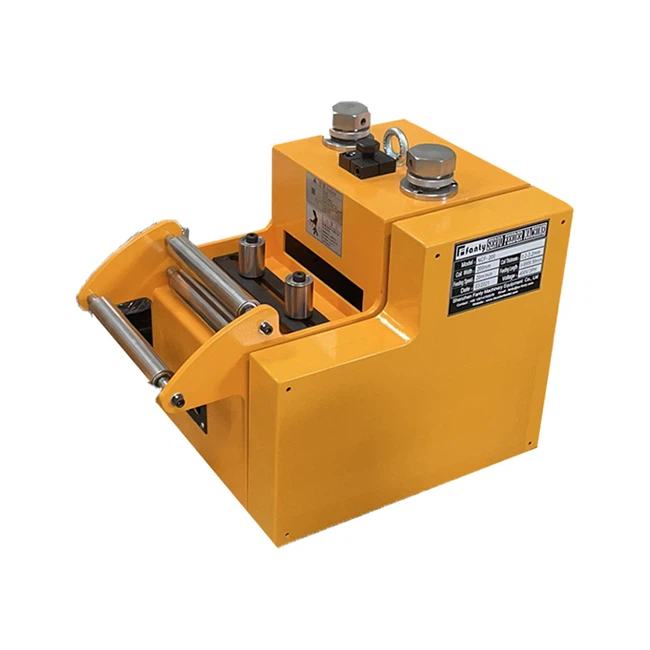
First off, let's briefly talk about what a pneumatic feeder machine is. It's a nifty piece of equipment that uses compressed air to move materials from one place to another. They're commonly used in factories for things like feeding metal strips, coils, or other small items into processing machines. We offer a great range of these machines on our website, including the Air Feeder Machine with Solenoid Valve, Metal Strip Air Feeds, and Automatic Air Feeder Machine.
Now, when it comes to high - temperature materials, things get a bit tricky. Pneumatic feeder machines are generally designed to work with materials at normal room temperatures. Why? Well, there are a few reasons.
One of the main issues is the effect of heat on the components of the pneumatic feeder. The seals, hoses, and other rubber or plastic parts in the machine can be seriously affected by high temperatures. Rubber seals can start to degrade, lose their elasticity, and eventually fail. This can lead to air leaks, which will reduce the efficiency of the pneumatic system. If the air leak is bad enough, the machine might not work at all.
Another problem is with the fact that high - temperature materials can cause a change in the physical properties of the materials being fed. For example, if you're feeding a metal strip that's really hot, it might expand. This expansion can cause jamming in the feeder mechanism. The feeder is calibrated to work with a certain size and shape of the material, and any deviation from that can lead to operational problems.
But that doesn't mean it's impossible to use a pneumatic feeder machine with high - temperature materials. There are some ways to make it work, but you need to take some precautions.
One approach is to cool the high - temperature materials before they enter the pneumatic feeder. You could use a cooling system, like a water - cooled jacket or a forced - air cooling setup. This way, the materials are at a more manageable temperature when they reach the feeder. However, setting up a cooling system can be costly and takes up extra space in your factory.
Another option is to modify the pneumatic feeder itself. You can use high - temperature resistant materials for the seals and hoses. For example, instead of using regular rubber seals, you could use silicone or Viton seals, which can withstand higher temperatures. You might also need to strengthen the mechanical parts of the feeder to deal with any expansion or changes in the material due to heat. But modifying the machine can be expensive and might require a lot of technical expertise.
Let's consider some real - world scenarios. In a foundry, where they deal with molten metals, you clearly can't use a standard pneumatic feeder machine. The temperatures are way too high, and the metal is in a liquid state. But if you're working with semi - hot materials, like freshly rolled steel strips that are still warm from the rolling process, it might be possible to use a pneumatic feeder with proper precautions.
We've had some customers who were in a similar situation. They were trying to feed semi - hot metal strips into a stamping machine. At first, they faced a lot of issues with jamming and air leaks. But after we helped them set up a simple air - cooling system and replaced the seals with high - temperature resistant ones, the pneumatic feeder started working much better.
So, to sum it all up, while it's not straightforward to use a pneumatic feeder machine for high - temperature materials, it can be done. You just need to be aware of the challenges and take the necessary steps to overcome them. If you're thinking about using a pneumatic feeder for high - temperature materials in your factory, it's a good idea to do a risk assessment and cost - benefit analysis.
If you have a specific problem or need more advice on using a pneumatic feeder for high - temperature materials, don't hesitate to get in touch. We're always happy to talk about how our machines can fit your needs and help you make the right decision. Reach out to us, and let's start a conversation about getting the best solution for your material feeding requirements.
References:


- Industrial Machinery Handbook
- Pneumatic System Design and Troubleshooting Guides