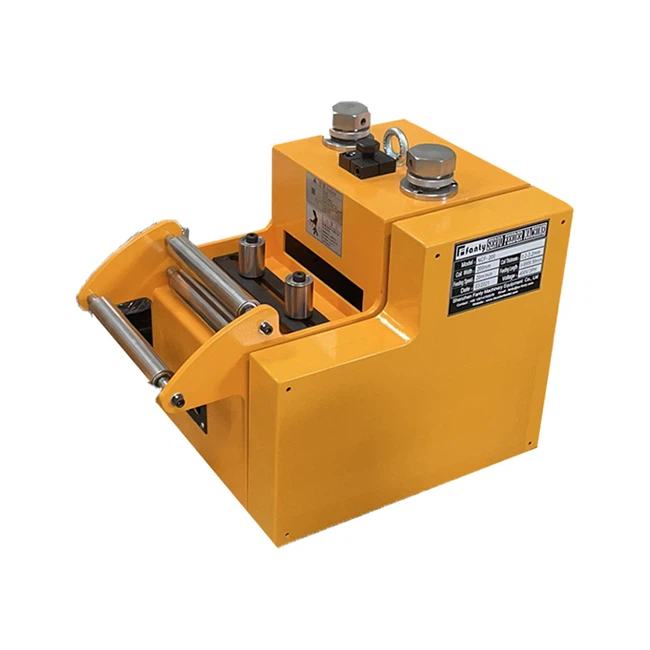
In the world of metal processing, reel straighteners play a crucial role in ensuring the quality and precision of metal sheets and strips. As a trusted supplier of reel straighteners, I've encountered numerous inquiries regarding the differences between single - roll and multi - roll reel straighteners. In this blog post, I'll delve into the characteristics, advantages, and applications of both types to help you make an informed decision for your metal processing needs.
Single - Roll Reel Straighteners
Single - roll reel straighteners, as the name suggests, utilize a single large roll to straighten the metal strip. This design is relatively simple and has its own unique set of features.
Working Principle
The working principle of a single - roll reel straightener is based on the application of a bending force to the metal strip. The metal strip passes over the single large roll, and the curvature of the roll imparts a bending moment to the strip. As the strip moves through the straightener, the bending force gradually eliminates the internal stresses and irregularities in the strip, resulting in a straightened product.
Advantages
- Simplicity and Cost - Effectiveness: Single - roll reel straighteners have a relatively simple structure, which means they are generally more affordable to purchase and maintain. The reduced number of components also simplifies the operation and maintenance process, making them a cost - effective choice for small - scale metal processing operations or those with limited budgets.
- Suitability for Thin and Soft Materials: These straighteners are particularly well - suited for straightening thin and soft metal strips. The single - roll design allows for a gentle bending force, which minimizes the risk of damage to the material during the straightening process. For example, in the production of aluminum foil or thin copper strips, single - roll reel straighteners can achieve excellent straightening results without causing excessive deformation.
Disadvantages
- Limited Straightening Capacity: Single - roll reel straighteners have a limited ability to correct severe curvatures or thick materials. The single - roll design can only apply a relatively small bending force, which may not be sufficient to straighten thick or highly deformed metal strips.
- Lack of Precision: Compared to multi - roll reel straighteners, single - roll straighteners may not be able to achieve the same level of precision in straightening. The single - roll design may not be able to fully eliminate all the internal stresses and irregularities in the material, resulting in a slightly less accurate straightening result.
Multi - Roll Reel Straighteners
Multi - roll reel straighteners, on the other hand, use multiple rolls arranged in a specific pattern to straighten the metal strip. This design offers several advantages over single - roll straighteners, especially in terms of straightening capacity and precision.
Working Principle
In a multi - roll reel straightener, the metal strip passes through a series of rolls that are arranged in an alternating pattern. The rolls apply a series of bending forces to the strip in different directions, which effectively breaks up the internal stresses and corrects the irregularities in the strip. The number and arrangement of the rolls can be adjusted according to the specific requirements of the material and the desired straightening result.
Advantages
- High Straightening Capacity: Multi - roll reel straighteners are capable of straightening thick and highly deformed metal strips. The multiple rolls can apply a larger and more evenly distributed bending force, which allows for the correction of severe curvatures and internal stresses. For example, in the processing of thick steel plates or heavy - gauge metal strips, multi - roll reel straighteners can achieve excellent straightening results.
- Precision Straightening: These straighteners can provide a high level of precision in straightening. The multiple - roll design allows for a more controlled and accurate application of the bending force, which can eliminate even the smallest irregularities in the material. This makes multi - roll reel straighteners ideal for applications where high precision is required, such as in the aerospace and automotive industries.
- Versatility: Multi - roll reel straighteners can be used to straighten a wide range of materials, including different types of metals, alloys, and even some non - metallic materials. The adjustable roll arrangement allows for customization of the straightening process to suit the specific properties of the material.
Disadvantages
- Higher Cost and Complexity: Multi - roll reel straighteners are generally more expensive to purchase and maintain due to their complex structure and larger number of components. The increased complexity also requires more skilled operators to ensure proper operation and maintenance.
- Longer Setup Time: Setting up a multi - roll reel straightener can be a time - consuming process, especially when changing between different materials or straightening requirements. The adjustment of the roll positions and pressures needs to be carefully calibrated to achieve the desired straightening result, which can add to the overall processing time.
Applications
The choice between a single - roll and a multi - roll reel straightener depends largely on the specific application and the characteristics of the material being processed.
Single - Roll Reel Straighteners
- Electronics Industry: In the production of printed circuit boards (PCBs), single - roll reel straighteners are used to straighten thin copper foils. The gentle straightening process ensures that the copper foil remains intact and free from damage, which is crucial for the quality of the PCB.
- Packaging Industry: Single - roll reel straighteners are also commonly used in the packaging industry to straighten thin metal strips for use in packaging materials. The cost - effectiveness and suitability for thin materials make them a popular choice in this industry.
Multi - Roll Reel Straighteners
- Automotive Industry: In the automotive manufacturing process, multi - roll reel straighteners are used to straighten steel sheets for body panels, chassis components, and other critical parts. The high precision and straightening capacity of multi - roll straighteners ensure the quality and dimensional accuracy of these parts.
- Aerospace Industry: The aerospace industry requires extremely high - precision metal components. Multi - roll reel straighteners are used to straighten metal strips and sheets for aircraft structures, engine components, and other aerospace applications. The ability to achieve precise straightening results is essential for ensuring the safety and performance of aerospace products.
Conclusion
In summary, both single - roll and multi - roll reel straighteners have their own unique advantages and disadvantages. Single - roll straighteners are simple, cost - effective, and suitable for thin and soft materials, while multi - roll straighteners offer high straightening capacity, precision, and versatility. As a supplier of reel straighteners, we understand the importance of choosing the right equipment for your specific needs. Whether you are looking for a UNCoiler Machine and Straightener Machine, an Automatic Coil Reel Straightener, or a Rack Leveling Machine 2 in 1, we can provide you with the professional advice and high - quality products you need.
If you are interested in learning more about our reel straighteners or have any questions regarding the selection of the right equipment for your metal processing operations, please feel free to contact us. We are committed to helping you find the best solution for your needs and look forward to the opportunity to work with you.


References
- "Metal Forming Handbook: Processes and Applications", Carl G. Lange
- "Modern Metalworking Processes", Richard A. Grylls