Hey there! As a supplier of Reel Straighteners, I often get a bunch of questions from folks who are looking to get the most out of these nifty machines. One of the most common queries I hear is, "How is the straightening force adjusted in a Reel Straightener?" Well, that's exactly what we're going to dig into today.
First off, let's talk about what a Reel Straightener does. In simple terms, it takes coiled metal material and straightens it out, making it ready for further processing. Think of all those manufacturing processes where you need flat, straight sheets or bars of metal - automotive, construction, you name it. The straightening force is key to getting a top - notch result.
There are several ways to adjust the straightening force, and it really depends on the type of Reel Straightener you're working with.
Manual Adjustment
One of the oldest and most straightforward methods is manual adjustment. This is like the classic approach. You've got your machine, and it comes with hand - operated screws or cranks. When you turn these, you're directly changing the distance between the straightening rollers.
Let's say you're working with a thinner gauge of metal. You'll want to reduce the straightening force so you don't over - stress or damage the material. To do this, you turn the screw or crank in a way that increases the gap between the rollers. It's kind of like giving the metal a bit more wiggle room as it passes through.
On the flip side, if you've got a thicker piece of metal, you'll need to increase the straightening force. So, you turn the screw or crank to decrease the gap between the rollers. This adds more pressure on the metal, allowing it to be bent and straightened effectively.
The beauty of manual adjustment is its simplicity. You don't need any fancy electronics or complex systems. It's straightforward, and if you've got an experienced operator, they can make precise adjustments just by feel. Plus, it's generally more cost - effective, especially for small - scale operations. But there are downsides too. Manual adjustment can be time - consuming, and it might not offer the same level of accuracy as some of the more advanced methods.
Hydraulic Adjustment
Hydraulic adjustment is a step up in terms of technology. With hydraulic systems, you've got a pump that moves hydraulic fluid to cylinders. These cylinders are connected to the straightening rollers.
When you want to adjust the straightening force, you're essentially controlling the pressure of the hydraulic fluid. If you want more force, you increase the pressure in the cylinders. This pushes the rollers closer together, applying more pressure on the metal as it goes through. If you need less force, you reduce the hydraulic pressure, and the rollers move apart.
The advantage here is that hydraulic adjustment can provide a lot of force. It's great for handling thick and tough materials. It's also relatively quick to make adjustments. You can change the force in a matter of seconds, which is super useful in high - volume production environments.


However, hydraulic systems do come with their own set of challenges. They're more complex than manual systems. There's a risk of hydraulic fluid leaks, which can be messy and costly to fix. And they require regular maintenance to keep everything running smoothly.
Electric Adjustment
Now, let's talk about electric adjustment. This is a modern option that's becoming increasingly popular. Electric adjustment systems use motors to control the movement of the straightening rollers.
You've got a control panel where you can input the desired straightening force. The motor then adjusts the position of the rollers accordingly. It's all about precision. You can set the exact amount of force you need, and the system will make sure it's applied.
One of the big benefits of electric adjustment is its accuracy. You can get very fine - tuned adjustments, which is crucial when working with high - quality materials where even a tiny deviation can cause problems. And it's really easy to use. Operators can learn to use the control panel quickly, and you can save different settings for different types of materials.
But like any technology, it has its drawbacks. Electric adjustment systems can be more expensive upfront. And if there's an issue with the electronics, it might require specialized technicians to fix.
In - Process Monitoring and Adjustment
Some of the more advanced Reel Straighteners come with in - process monitoring systems. These systems use sensors to measure things like the flatness of the straightened material as it's being processed.
If the sensors detect that the material isn't as straight as it should be, they can automatically adjust the straightening force. For example, if the material is coming out with a slight curve on one side, the system can increase the force on that side to correct it.
This is a game - changer, especially for industries where precision is everything. It helps to ensure consistent quality throughout the production process. But as you can imagine, these systems are at the high - end of the price spectrum. They're more complex to install and maintain, but for large - scale operations with high - quality requirements, the investment can pay off big time.
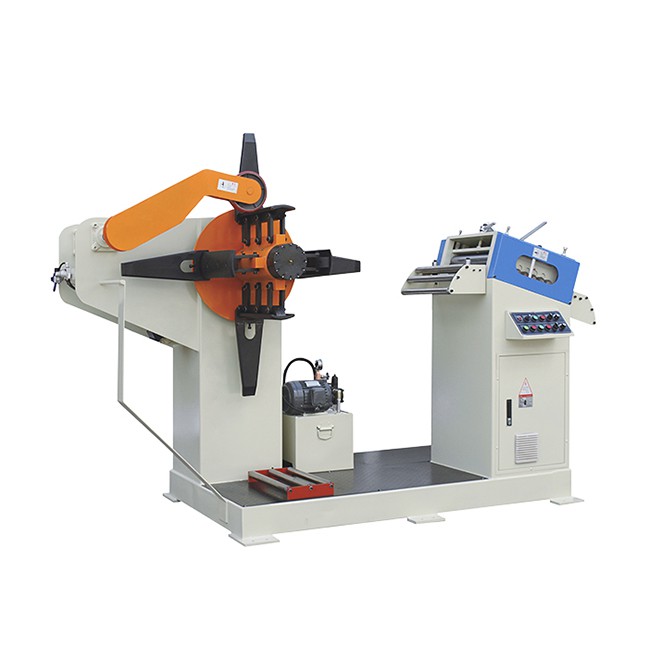
Now, depending on your needs, we've got a range of Reel Straightener models. Check out our Thick Plate UNCoiler Leveler Machine if you're dealing with thicker plates. It's designed to handle the tough stuff and has adjustable straightening force to get the job done right.
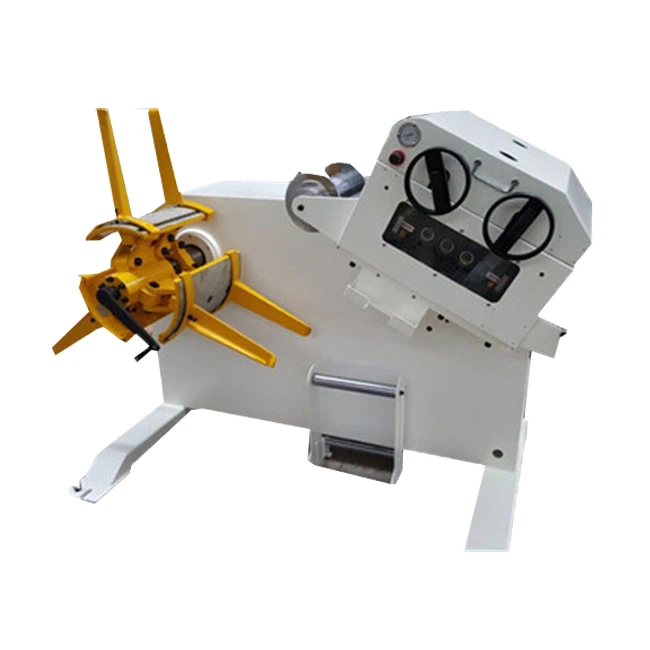
If you're looking for an automated solution, our Automatic Coil Reel Straightener is a great option. It can streamline your production process and offers precise force adjustment.
And for those who want separate functions, we also have the UNCoiler Machine and Straightener Machine. These work together to give you flexibility and control over the straightening process.
If you're interested in any of our Reel Straighteners or have more questions about adjusting the straightening force, don't hesitate to reach out. We're here to help you find the perfect solution for your business and ensure you get the best results from your metal - working operations.
References
- "Metal Forming Handbook", various authors.
- Industry whitepapers on Reel Straightener technology.